
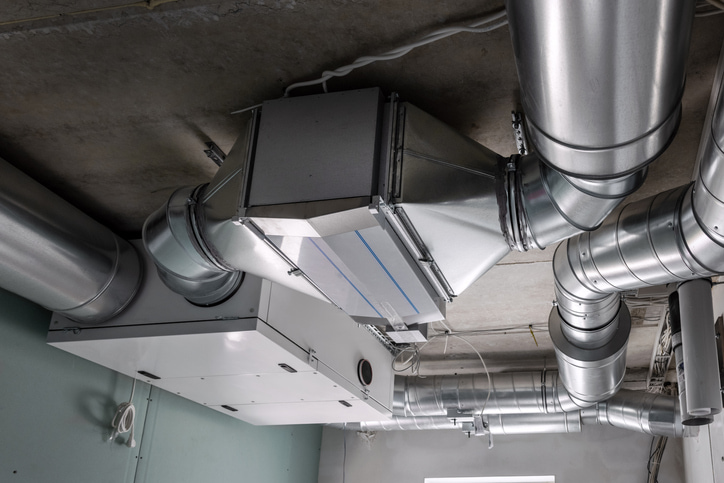
The air inside your home travels through long, hidden pathways before it ever reaches you. In the Upstate heat, those pathways take a beating. Insulation sags, seams separate, and the cool air your system labors to produce bleeds silently into crawlspaces and attic voids. You never see it leave. You only see the higher cooling bill arrive. If your ductwork has cracks and leaks, you must repair the damaged ducts to cut cooling costs in Moore, SC.
The Hidden Drain Behind High Cooling Bills
Most homeowners blame their aging air conditioner when cooling costs climb. But the U.S. Department of Energy estimates that leaky ductwork accounts for 20 to 30 percent of conditioned air loss in a typical home.
That’s not a minor inefficiency; it’s nearly a third of your investment escaping before it ever reaches a single room. The equipment runs longer, the compressor strains harder, and the thermostat never quite reaches its target. If your system seems to run endlessly without satisfaction, the ducts deserve a serious look before the unit does.
Duct Damage Doesn’t Announce Itself
Deterioration is patient. It works in the dark, behind drywall, above drop ceilings and beneath floorboards.
Flexible ductwork can kink or collapse under the weight of attic insulation. Metal ducts develop rust and pull apart at joints over years of thermal expansion. Pests chew through vapor barriers and duct board with remarkable efficiency.
None of these failures produces a sound or a warning light. They produce a warm room in a house that should be cool and a power bill that keeps climbing.
Six Warning Signs Your Ducts Need Attention
Spotting duct failure early saves money and prevents larger system damage down the road. Watch for these specific indicators:
- Certain rooms stay warm no matter how low the thermostat drops.
- Visible dust rings appear around supply registers after cleaning.
- Your energy bills spike without any change in usage habits.
- The system runs in long, unbroken cycles without reaching setpoint.
- You hear whistling or rattling from vents during operation.
- Indoor air quality worsens with more particles or odors circulating.
What Happens During a Professional Duct Repair
A thorough duct repair isn’t a matter of wrapping tape around a loose joint and calling it done. Service technicians begin by pressurizing the duct system with a blower door test or duct blaster to quantify the actual leakage rate. Once leaks are mapped, the work involves sealing breaches, reattaching disconnected flex duct sections, replacing crushed or collapsed runs, and re-insulating any exposed sections that have lost their thermal barrier. The result is a system that delivers what it produces, not one that loses a third of it in transit.
Duct Condition and Indoor Comfort Are Directly Linked
A well-sealed duct system does more than move air efficiently. It maintains consistent pressure throughout every room, reduces the volume of unconditioned attic or crawlspace air that infiltrates living areas, and takes real load off the blower motor.
Homes with compromised ductwork often feel uneven, with bedrooms at the end of a long duct run sitting noticeably warmer than rooms near the air handler. Sealing those leaks rebalances the entire system without a single equipment upgrade.
It’s Time to Stop Cooling Your Attic for Free
Leaking ducts aren’t a quirk or a minor nuisance. They’re an ongoing financial loss that compounds every time your system cycles. When conditioned air escapes into an unconditioned attic space, it drives up humidity levels, accelerates insulation degradation and forces your system to operate far beyond its designed parameters.
Call to Repair Damaged Ducts in Moore, SC, and Cut Cooling Costs
Duct repair is one of the highest-return improvements an Upstate homeowner can make before temperatures lock in for summer. At Your Service Heating and Air serves Moore and the surrounding area with the diagnostic tools and hands-on expertise to find every breach and seal it correctly the first time. Call today to schedule your duct evaluation and find out exactly how much conditioned air your home has been losing.
Image provided by iStock